



Nearly 2,000 limestone karsts rising out of jade-green water, floating fishing villages, hidden lagoons, Halong Bay looks like nowhere else on Earth. It’s easy to see why the bay is a UNESCO World Heritage Site and one of the most photographed stretches of coastline in Southeast Asia.
However, the difference between an unforgettable trip and a not-so-great one usually comes down to a handful of decisions made before you book.
This guide walks you through everything a first-time visitor needs to know for 2026-2027: when to go, how a Halong Bay cruise actually works, what separates a budget boat from a luxury cruise, and the practical details (visas, packing, money) that don’t show up in the postcard photos. By the end, you’ll know exactly how to plan a Halong Bay trip that matches your time, budget, and expectations.
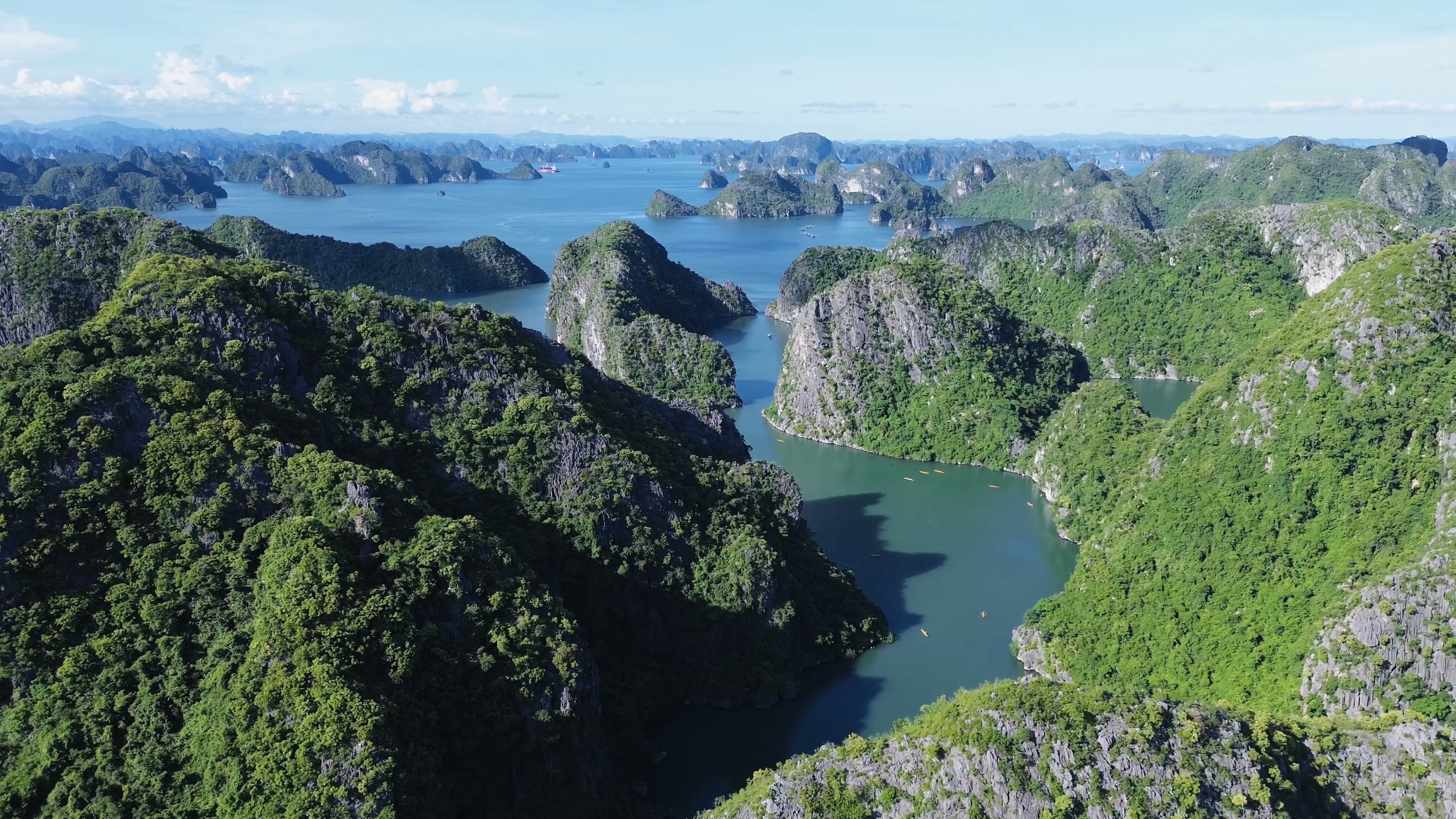
Overview of Halong Bay
Halong Bay is located in Quang Ninh Province in northeastern Vietnam, lies approximately 165–170 kilometers (103–106 miles) east of Hanoi. The UNESCO-listed core zone covers around 1,500 square kilometers, encompassing approximately 1,969 limestone islands and islets.
Ha Long Bay was officially inscribed as a UNESCO World Heritage Site in 1994, with its boundaries extended in 2000 to include additional scenic areas. In 2023, UNESCO expanded the site further by merging Ha Long Bay with the neighboring Cat Ba Archipelago – recognized as a UNESCO Biosphere Reserve since 2004 – creating the unified Ha Long Bay – Cat Ba Archipelago World Heritage property.
The spectacular scenery seen today is the result of centuries of geological evolution. Emerald water, ancient coral reefs, tectonic activity, erosion, and rising sea levels gradually sculpted thousands of limestone towers, hidden caves, enclosed lagoons, and dramatic cliffs that define the bay’s distinctive character.
Beyond its geological significance, Halong Bay also supports a rich marine ecosystem, with mangrove forests, coral reefs, floating fishing communities, and diverse wildlife contributing to its natural importance.
- Main Cruise Ports: Halong International Cruise Port, Tuan Chau Marina
- Location: Quang Ninh Province, northeastern Vietnam
- Area: Approximately 1,500 km²
- Number of Islands & Islets: Around 1,969
- Nearest major city: Halong City (Quang Ninh Province)
- Nearest airports: Van Don International Airport (~50km); Cat Bi Airport, Hai Phong (~60km); Noi Bai International Airport, Hanoi (~160km)
Why visit Halong Bay in 2026 – 2027
Easier Than Ever to Reach
Traveling to Halong Bay is now more convenient than ever. The Hanoi – Hai Phong – Halong Expressway reduces the journey from Hanoi to approximately 2.5 – 3 hours, while Van Don International Airport, Cat Bi International Airport, and Noi Bai International Airport provide convenient access for both domestic and international travelers.
Elevated Cruise Experiences
Today’s Halong Bay cruises offer far more than sightseeing. From elegant suites and gourmet dining to kayaking, cave exploration, wellness activities, and sunset experiences, modern cruise itineraries are designed to suit every travel style – whether you’re seeking relaxation, adventure, or a romantic escape.
A Timeless Wonder Worth Experiencing
In 2027, Halong Bay offers what few destinations still can: a sense of wonder that feels entirely real. Sailing through this UNESCO World Heritage Site means moving among landscapes sculpted over millions of years – where ancient geology, Vietnamese heritage, and the sheer scale of nature come together.
When to Visit Halong Bay
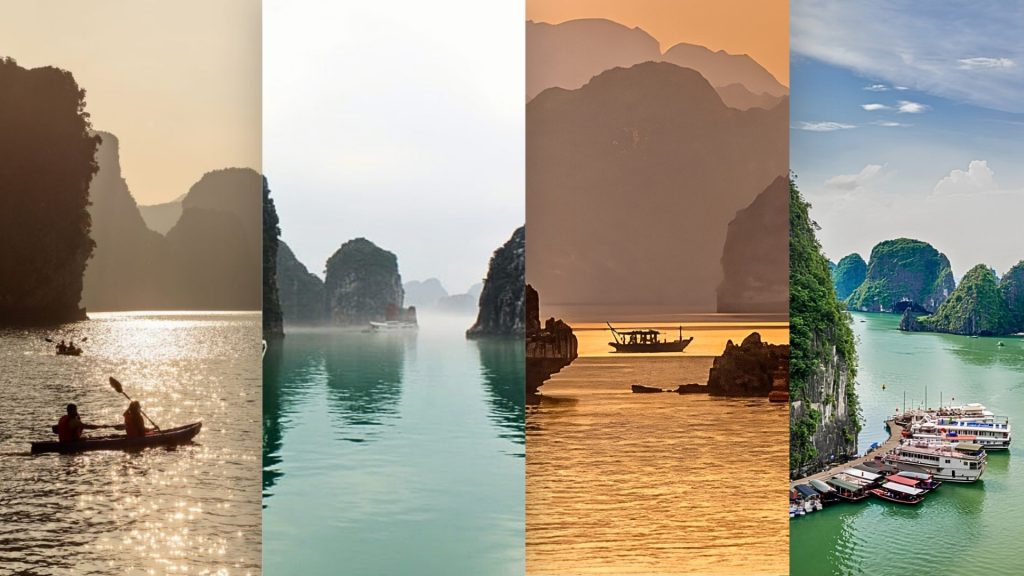
Halong Bay is a year-round destination, with four distinct seasons offering different experiences. The best time to visit depends on your travel preferences – whether you’re seeking clear skies for sightseeing, pleasant weather for outdoor activities, or quieter cruises away from the crowds.
Autumn (September – November): Best Overall Season
Autumn is often considered the ideal time to experience Halong Bay. Pleasant temperatures of 22-27°C (72-81°F), lower humidity, and clearer skies create excellent conditions for sightseeing and panoramic views of the limestone karsts.
Best for: Executive retreat, Scenic views, Photography, Outdoor adventure, Couples and honeymooners
| September | October | November | |
| Typical Max (°C) | 31°C | 29°C | 26°C |
| Typical Min (°C) | 25°C | 23°C | 20°C |
| Rainfall | Moderate | Low | Low |
| Note | Warm, fewer showers | Clear skies | Cool, excellent visibility |
Winter (December – February): Best for Peaceful Cruises
Winter offers a softer and more tranquil side of Halong Bay. Temperatures range from 15-20°C (59-68°F), with occasional mist creating a mysterious atmosphere and offering a chance to slow down, though reduced visibility may affect photography and swimming.
Best for: Peaceful getaways, Small private groups, Scenic misty landscapes
| June | July | August | |
| Typical Max (°C) | 22°C | 20°C | 21°C |
| Typical Min (°C) | 17°C | 15°C | 16°C |
| Rainfall | Low | Low | Low |
| Note | Cool, calm | Cool, misty | Cool, humid |
Spring (March – May): Best for Sightseeing & Photography
Spring is warm, increasingly humid. Temperatures range from 20-24°C (68-75°F), creating comfortable conditions for cruising, kayaking, and cave exploration with dreamy mist during the morning.
Best for: Sightseeing, Outdoor excursions, First-time visitors, Couples & honeymooners.
| March | April | May | |
| Typical Max (°C) | 23°C | 27°C | 31°C |
| Typical Min (°C) | 18°C | 21°C | 24°C |
| Rainfall | Low | Moderate | Moderate |
| Note | Mild, comfortable | Pleasant, clear skies | Warm, ideal for cruising |
Summer (June – August): Best for Beach Activities
Summer is warm and lively, with temperatures ranging from 27–32°C (81–90°F). Lower prices and fewer crowds make it an appealing time to visit, though occasional typhoons may affect travel plans. Longer daylight hours offer more time to enjoy beach and onboard activities.
Best for: Family holidays, Incentive tour/corporate outings, Outdoor activities
| June | July | August | |
| Typical Max (°C) | 32°C | 32°C | 31°C |
| Typical Min (°C) | 26°C | 27°C | 26°C |
| Rainfall | High | High | High |
| Note | Long daylight | Hot, occasional storms | Warm, tropical showers |
How to get to Halong Bay
Located approximately 160 km from Hanoi, Halong Bay is easily accessible by modern expressways, domestic flights, and private transfers. Most travelers can reach the bay in 2.5 – 3 hours, making it an ideal destination for both short getaways and relaxing journey. Below are the most convenient ways to travel to Halong Bay in 2027.
Getting there from Hanoi
Hanoi is the primary gateway to Halong Bay, with several transportation options available to suit different budgets and travel styles. Most cruise operators depart from Halong International Cruise Port or Tuan Chau Marina, both easily accessible by road.
By Shared Shuttle Bus
- Best for: Budget – conscious travelers and solo visitors
- Travel time: 2.5 – 3 hours
- Departure time: 7:30 AM and 9:00 AM
- Estimated cost: USD 10 – 20 per person (one way)
By Luxury Limousine
- Best for: Luxury FITs, couples, and small groups
- Travel time: Approximately 2.5 hours
- Estimated cost: USD 12 -30 per person (one way)
By Private Car
- Best for: Families, private groups, and VIP travelers
- Travel time: Approximately 2.5 hours
- Estimated cost: USD 106 – 120 per vehicle (max 7 – 9 people)
Lyra Collection Cruise Transfer
Our luxury Halong Bay cruises offer three ways to get there, each suited to a different kind of traveler.
Shared Limousine – One Way
- Best for: Budget-conscious travelers, solo guests
- Travel time: Approximately 2.5-3 hours
- Estimated cost: USD 30 / 750,000₫ per person (one way)
Shared Limousine – Round Trip
- Best for: Solo travelers and couples seeking convenience without the cost of a private car
- Travel time: Approximately 2.5-3 hours each way
- Estimated cost: USD 46 / 1,150,000₫ per person (round trip)
Private Car, 7 Seats – Round Trip
- Best for: Luxury FITs, couples, and small groups
- Travel time: Approximately 2.5 hours each way
- Estimated cost: USD 310 / 7,800,000₫ per group (round trip)
Which routes should you choose?
Not all Halong Bay cruises follow the same itinerary. Depending on the cruise duration, departure port, and operator, vessels may sail along different official routes, each offering its own collection of caves, islands, beaches, floating villages, and outdoor activities.
Despite of personal styles, understanding these routes can help you choose the cruise that best matches your travel preference.
Halong Bay main route

This is the Halong Bay the world already knows – the karsts that appear on postcards, in film, in the mental image most travelers carry long before they arrive. It is the bay’s main artery, and for good reasons: this route holds the highest concentration of the formations that made Halong famous, clustered close enough together to feel like sailing through a gallery.
Popularity, here, means sharing the view. This is the busiest waterway in the region, drawing the largest share of domestic and international visitors, and local regulations limit the range of on-water activities permitted here. The focus stays on the scenery itself rather than what you do within it. For first-time visitors, this is the Halong Bay they already carried in their imagination, now finally in front of them.
Lan Ha Bay route
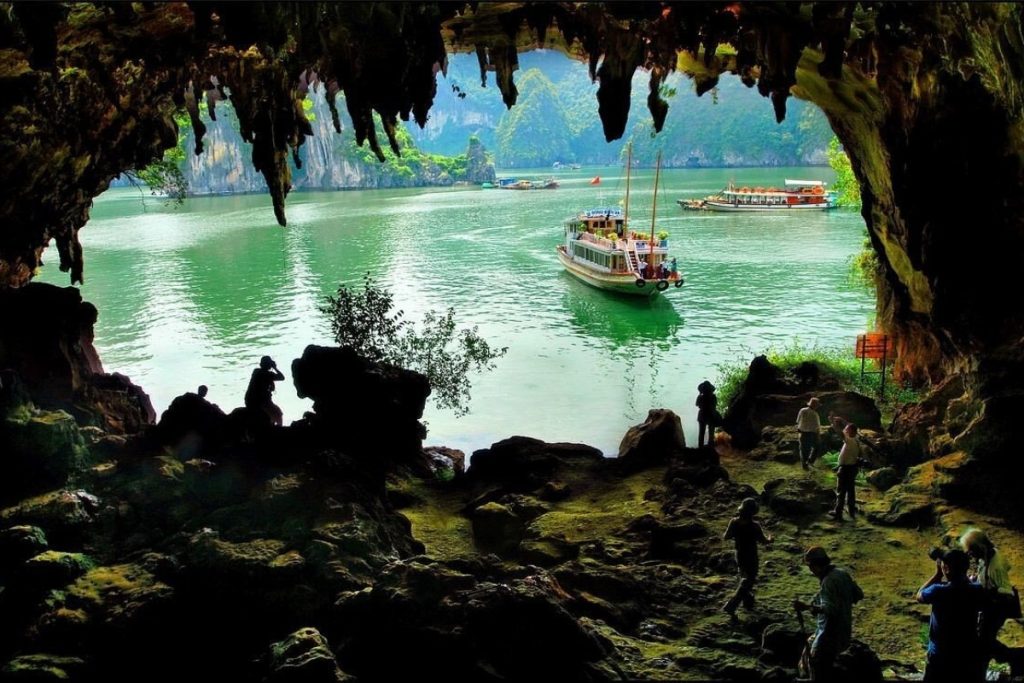
Lan Ha unfolds slowly: smaller karsts rising from calmer, more sheltered water, framed by white-sand coves and forested cliffs that feel closer, more intimate than the open scale of Halong Bay. Halong Bay itself lingers on the horizon, close enough to admire, far enough to stay someone else’s view.
Here, more flexible permitting opens the water to a wider range of experiences: kayaking through hidden lagoons, quiet swims off secluded beaches, and something found nowhere else in the bay – Lyra Collection’s signature waterslide, for guests who like their luxury with a little motion.
Bai Tu Long Bay route
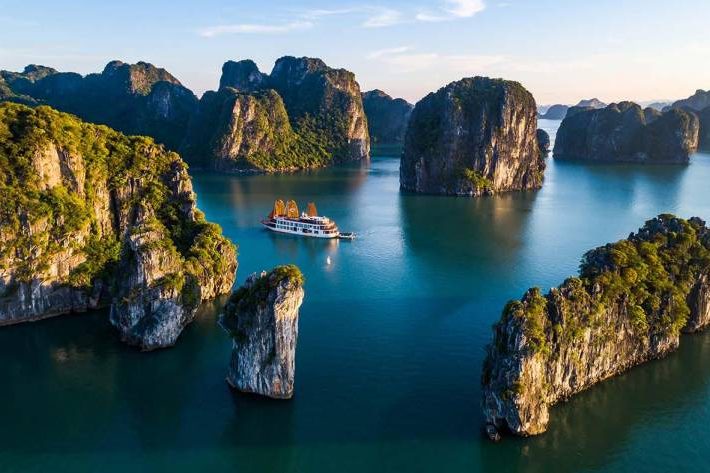
Sail further out, and Bai Tu Long unfolds with a rawness the closer routes have long since lost – karsts rising from water rarely crossed by other boats, past fishing villages that carry on much as they did before tourism arrived. There is little here that’s been shaped for visitors, it feels less like a route, more like a discovery.
That remoteness leaves the bay more exposed to open water and shifting weather, so this route is best sailed in calmer conditions rather than during the region’s more unpredictable stretches. For those who’ve already seen the postcard view, this is where Halong Bay’s landscape feels unexplored again.
What to Do in Halong Bay?
Adventure
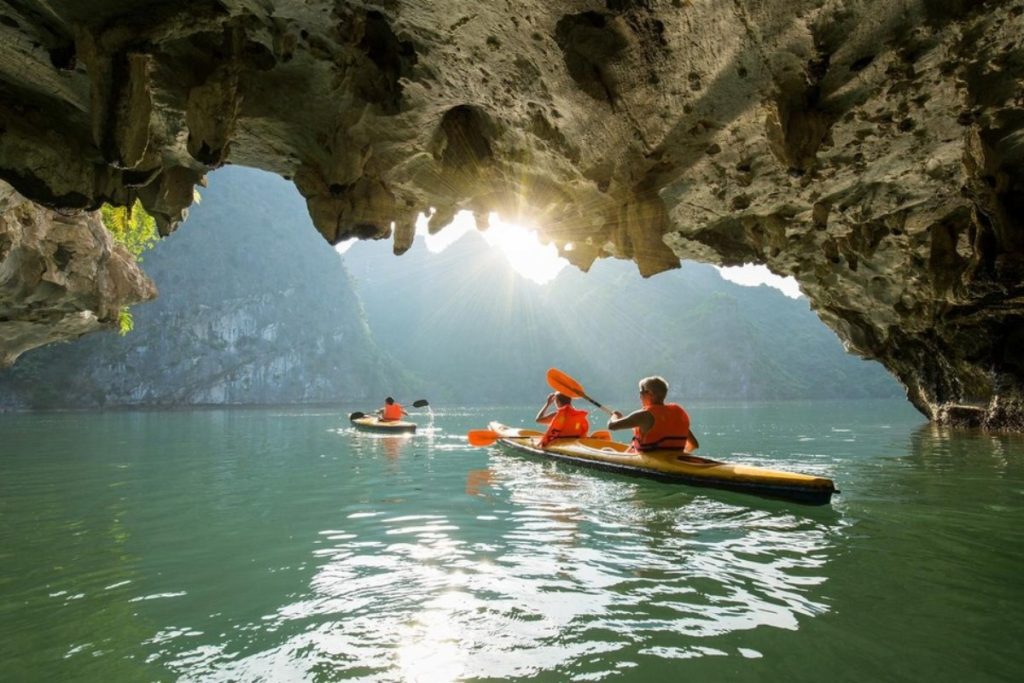
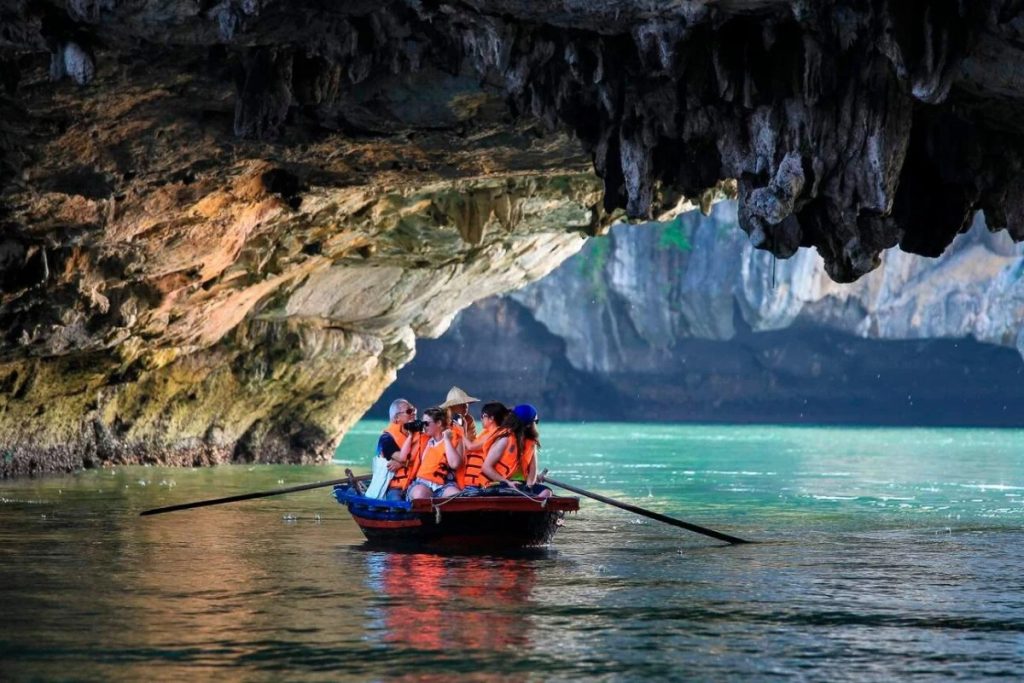
Discover the natural wonders of Halong Bay and Lan Ha Bay through kayaking, swimming, cave exploration, and rowing boat excursions. Highlights include the serene beaches of Ba Trai Dao, the local village of Viet Hai, Trung Trang Cave, hidden water caves, and adventure activities such as rock climbing. Rock climbing requires a permit and should only be undertaken with proper safety arrangements due to the inherent risks.
Leisure onboard
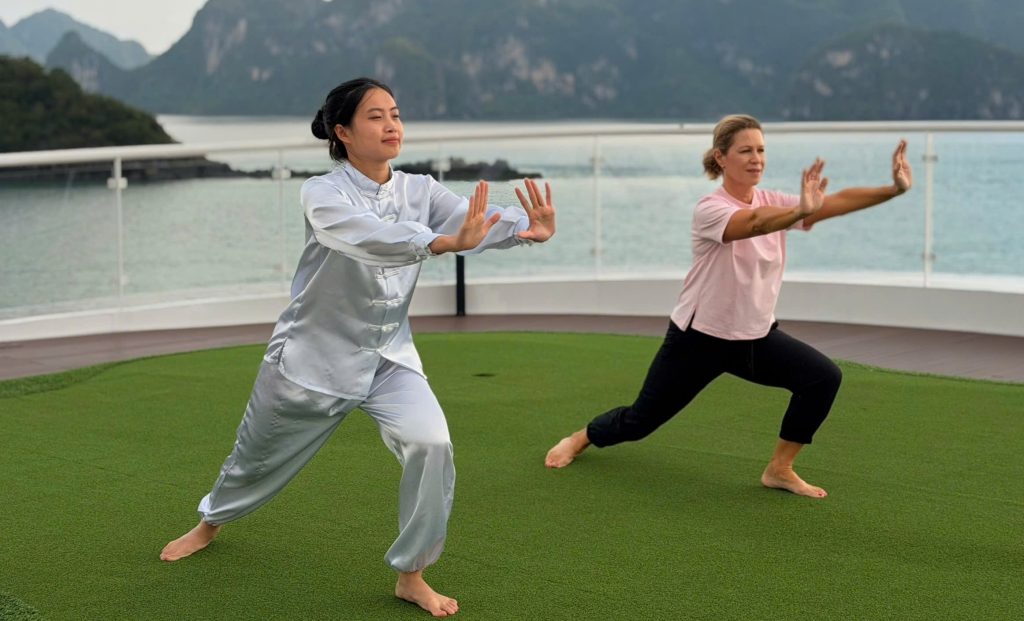
Unwind with a range of onboard leisure and wellness experiences, from the pool, jacuzzi, sauna and spa to the poker club, entertainment room and mini golf course. Evenings can be enjoyed with squid fishing, movie nights, Tai Chi, or quiet moments on the sundeck overlooking the bay.
Cultural immersion
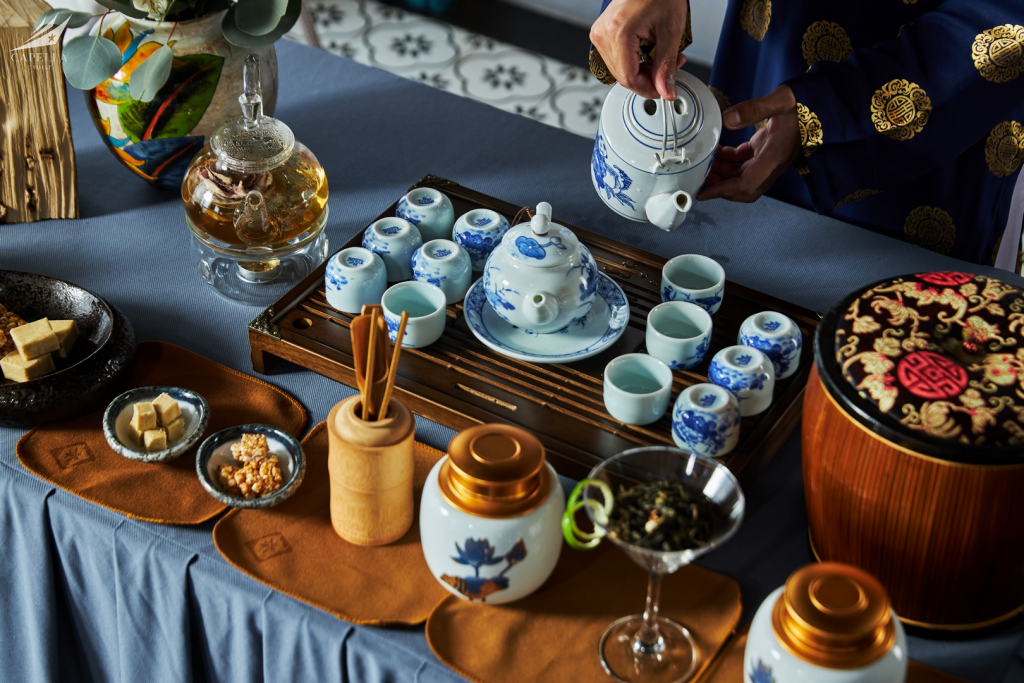
Experience the traditions and flavours of Vietnam through Vietnamese tea ceremony, Vietnamese wine tasting and wine gallery experiences, cooking classes, and Vietnamese fusion cuisine. Each activity offers a closer connection to the country’s culinary heritage and cultural traditions while sailing through Halong Bay.
WHICH IS best Halong bay cruise duration you should choose?
A DAY CRUISE
A Halong Bay day cruise is the fastest way to experience the bay, typically covering one cave visit and a single water activity like kayaking or swimming, plus lunch onboard. It’s a practical choice for travelers short on time or those visiting Hanoi on a tight schedule, but it comes with real trade-offs worth knowing before you book.
Since the drive from Hanoi to Halong Bay takes around 2 to 2.5 hours each way, you’re left with only about 4-5 hours actually on the water – barely enough time to scratch the surface of what the bay has to offer. A day cruise doesn’t allow time to visit many other fascinating destinations and you’ll miss out on onboard leisure activities like the swimming pool, spa, or evening squid fishing entirely.
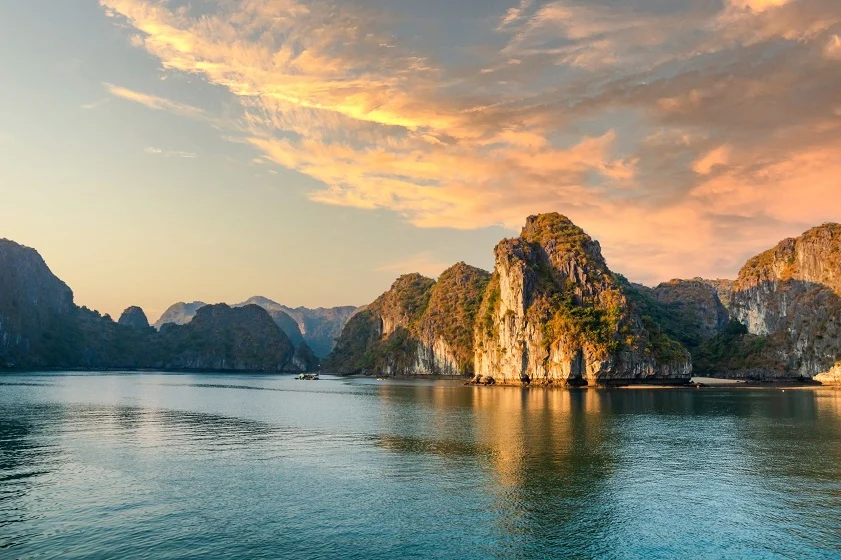
Most importantly, choosing a day cruise in Halong Bay means missing its most iconic moments: sunrise and sunset over the limestone karsts, an experience reserved only for travelers who stay overnight. If your itinerary allows, an overnight Halong Bay cruise is the better way to see the bay at its best.
A NIGHT CRUISE
2-Day 1-Night Cruise
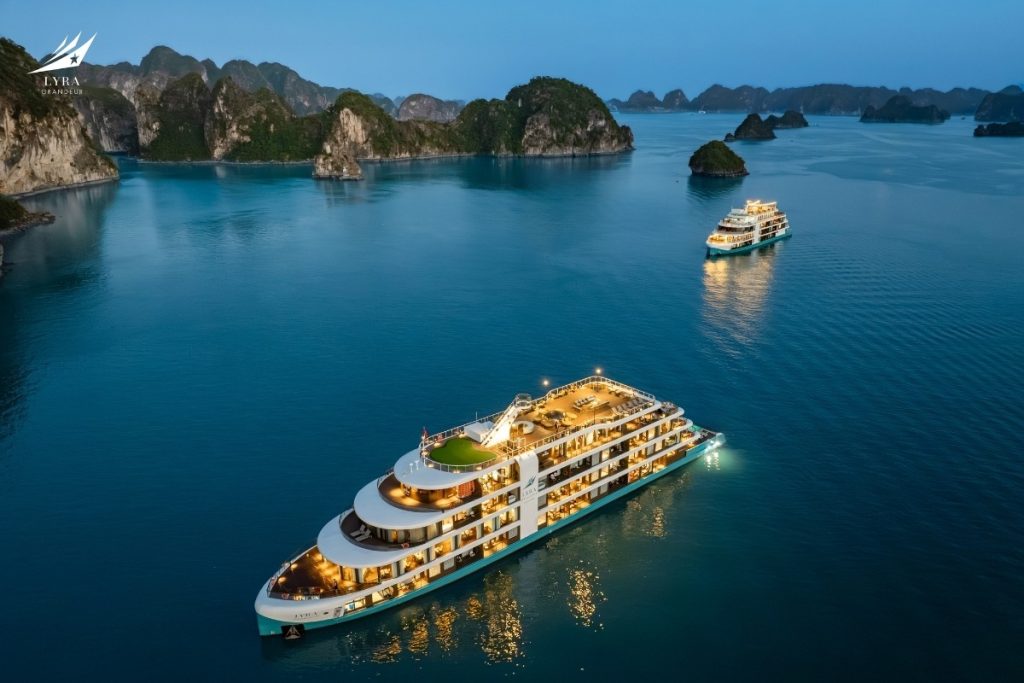
The most popular choice among first-time visitors. It gives you enough time to enjoy a full day of activities – kayaking, cave visits, swimming – plus one night onboard to catch a sunset over the water and wake up to sunrise over the limestone islands. A great balance between time and experience for those who want more than a day trip but don’t have several days to spare.
Discover the 2-day, 1-night Lyra Cruise Collection’s itinerary
3-Day 2-Night Cruise
Ideal for travelers who want to go beyond the main bay and explore specular scenes further, often including Lan Ha Bay or Cat Ba Island. With two nights onboard, you get more time for activities like rock climbing, village visits, and cooking classes, and a slower, more immersive pace overall.
Discover the 3-day, 2-night Lyra Cruise Collection’s itinerary
4-Day 3-Night Cruise
The most comprehensive option, best suited for travelers who want to explore Halong Bay in depth without rushing. This duration typically covers a wider range of routes, including quieter and less-visited areas, and allows time for nearly every onboard and off-board activity – from cultural experiences to adventure activities – without feeling packed.
Discover the 4-day, 3-night Lyra Cruise Collection’s itinerary
Practical Tips for First-Time Visitors
Planning ahead can make a Halong Bay cruise smoother and more enjoyable. From preparing travel documents to choosing the right cruise and packing for the journey, these practical tips help make the most of every moment on the bay.
Before You Go
- Entry, Visas & Travel Documents: Check the latest visa and entry requirements, and keep passports, e-visas and cruise booking documents accessible.
- Booking in Advance: Book several months ahead for a wider choice of cabins and departure dates, particularly during peak periods.
- Choose the Right Cruise: Compare itineraries, cabins, facilities, activities, service and inclusions rather than price alone.
Money & Connectivity
- Currency & Payments: Carry some VND for small purchases and optional expenses; credit cards are widely accepted on international-standard cruises.
- Connectivity: A local SIM or eSIM can provide reliable mobile data, while onboard Wi-Fi may vary depending on location and weather.
Packing & Preparation
- What to Pack: Bring lightweight clothing, swimwear, comfortable walking shoes, sunscreen, sunglasses, a hat and a waterproof pouch.
- Health Essentials: Pack personal medication and seasickness remedies if needed.
- Weather: Check the forecast before departure and prepare clothing accordingly, as conditions can vary throughout the year.
Safety & Responsible Travel
- Onboard Safety: Follow crew instructions and use appropriate safety equipment during kayaking, swimming and other water activities.
- Responsible Travel: Respect local communities and natural sites, minimise single-use plastics and avoid purchasing products made from protected wildlife or marine life.
Getting the Best Value
- Travel Flexibly: Adjusting travel dates, cruise duration or cabin categories may offer better availability and value.
- Consider the Season: Shoulder and off-season travel can offer a quieter experience and, depending on availability, more attractive rates.
- Look Beyond the Price: The best-value cruise balances accommodation, itinerary, facilities, activities, service and inclusions.
FREQUENTLY ASKED QUESTION
When is the best time of year to visit Halong Bay?
The best time to visit Halong Bay is during spring (March to May) and autumn (September to November), when temperatures range from 20°C to 28°C with clear skies and calm seas. Summer (June to August) brings heat and typhoon risk, while winter (December to February) can be cold, misty, and low-visibility.
Is 2 days 1 night enough for Halong Bay, or should I do 3 days 2 nights?
A 2-day 1-night cruise is enough for first-time visitors, covering the activities on the water with kayaking, cave visits, and sunset/sunrise views. A 3-day 2-night cruise suits travelers who want a slower pace, deeper exploration to Lan Ha Bay or Cat Ba Island, and more time for swimming and off-boat excursions.
What happens if my Halong Bay cruise is canceled due to bad weather or typhoons?
Cruise cancellations are regulated by the Quang Ninh Maritime Administration for safety, mainly during typhoon season (July-August). If canceled before departure from Hanoi, travelers typically receive a refund or rebooking option. If canceled mid-trip, operators charge only for completed services and refund the rest after calculated.
Does the Lyra Cruise Collection’s cruises include hotel pick-up in Hanoi?
Yes, Lyra Cruise Collection offers hotel pick-up in Hanoi, but it’s charged as an add-on rather than bundled into the base cruise price. Pickup is available from hotels within the Hanoi Old Quarter, and travelers can add this service during booking or request it separately with their travel consultant.
What is the difference between Halong Bay, Lan Ha Bay, and Bai Tu Long Bay?
Halong Bay is the classic UNESCO site with famous landmarks like Sung Sot Cave and Ti Top Island, but sees heavy traffic. Lan Ha Bay, south near Cat Ba Island, offers cleaner water, fewer crowds, and better kayaking. Bai Tu Long Bay, northeast of Halong, is the quietest and most untouched option.
What is usually included in a Halong Bay cruise price?
Standard inclusions cover full-board meals (breakfast, lunch, dinner, brunch), entrance fees, cave visits, kayaking or bamboo boat rides, and an English-speaking guide. Round-trip Hanoi transfers, alcoholic beverages, spa treatments, and personal expenses are typically charged separately unless booked as part of an all-inclusive package.
Do Halong Bay cruises accommodate vegetarian, vegan, or halal diets?
Most reputable cruise operators accommodate vegetarian, vegan, gluten-free, and allergy-related dietary needs at no extra charge, provided guests notify the cruise at least 72 hours before departure. Halal meal options are typically arranged only on select luxury cruises upon request.
Lyra Cruise Collection follows this same standard – vegetarian, vegan, gluten-free, and allergy-related requests are accommodated at no additional cost with 72 hours’ notice, and halal meal options can also be arranged upon request as part of its dining service.
Is there Wi-Fi and mobile phone signal on a Halong Bay cruise?
Most modern cruise ships offer free onboard Wi-Fi, though connection often becomes weak or drops entirely as the boat sails deeper between limestone karsts. Local 4G/5G signals from Viettel and Vinaphone generally work well in open areas of the bay but may fade near cliffs and caves.
Is a Halong Bay cruise suitable for young children, pregnant women, or elderly travelers?
Most Halong Bay cruises are family-friendly, but accessibility varies by ship and itinerary – some caves and viewpoints require stair climbing that may be difficult for elderly travelers or pregnant women. It’s best to check with the cruise operator about mobility-friendly routes and onboard medical support before booking.
What should I pack for an overnight Halong Bay cruise?
Essentials include comfortable walking shoes for cave treks, swimwear for kayaking or swimming, light layers for changing weather, sunscreen, and a light jacket for evenings on deck. Checking your transfer bus’s luggage limit in advance is also recommended, since space can be restricted on shuttle vans.