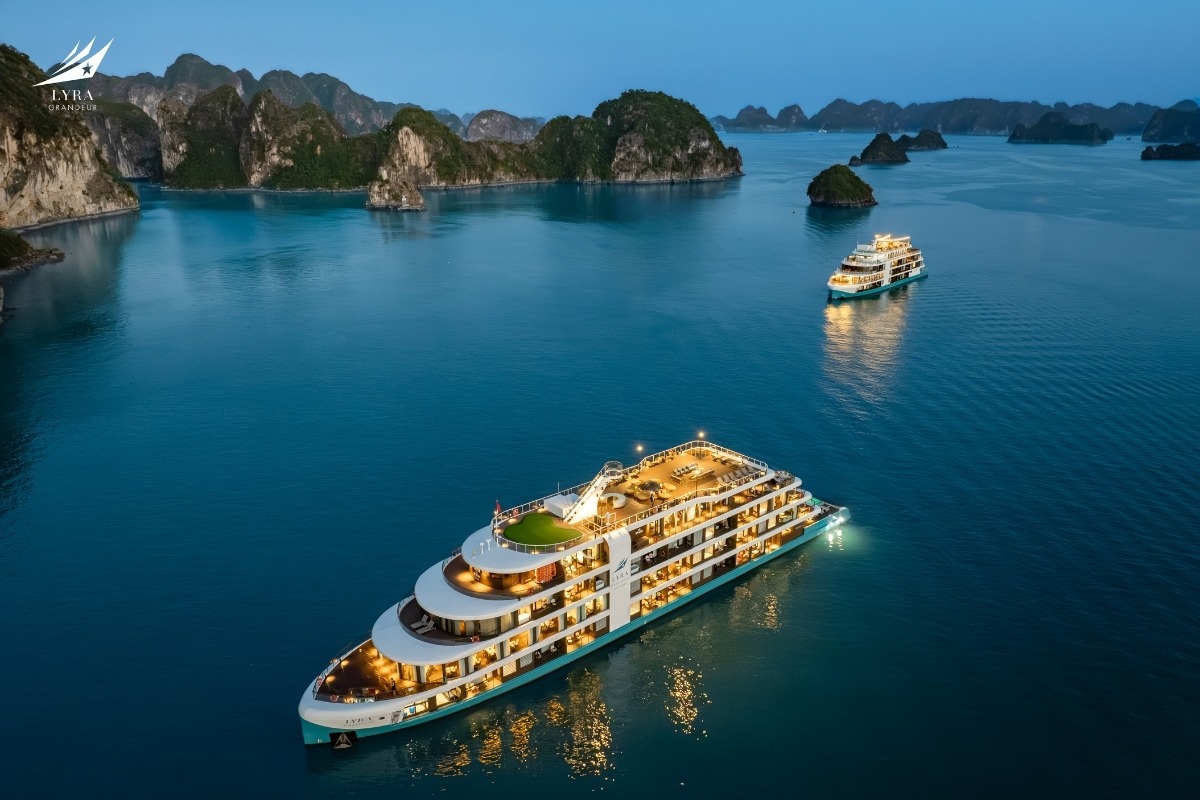

The descending dragon is not a flourish. It is a translation.
In Vietnamese, ha means descending and long means dragon. Ha Long Bay carries that meaning in full, and has done since the name first appeared on a naval chart just over a century ago.
Long before this became one of the most photographed places in Vietnam, it was something more layered. A record of rock, of settlement, of sea power, and of myth. All of it gathers around one story.
To understand the place the bay holds, in Vietnamese memory as much as on the UNESCO list, it helps to read it from the seabed up. Hundreds of millions of years of stone. Thousands of years of life along its shores. Naval victories that decided the fate of a country. And the legend of the descending dragon, which gave this water both its name and its meaning.
Halong Bay lies in Quang Ninh Province in northeastern Vietnam, about 165 kilometres (103 miles) east of Hanoi. The UNESCO-listed core zone covers around 1,500 square kilometres and some 1,969 limestone islands and islets.
How Ha Long Bay was formed
The limestone was not shaped in one lifetime, or one civilisation. Its story runs close to 570 million years, across worlds that would be unrecognisable to each other.
Between the Ordovician and Silurian periods, roughly 500 to 410 million years ago, this region lay beneath a deep sea. By the Carboniferous and Permian that sea had grown shallow. By the late Paleogene and early Neogene, some 26 to 20 million years ago, the area had become a broad coastal plain, taken and released by the tides over the following two million years.
Three mountain-building events set the bedrock. The Caledonian orogeny at the close of the Silurian, around 410 million years ago. The Indosinian, near the end of the Triassic, around 200 million years ago. The Alpine, towards the end of the Paleogene, roughly 30 million years ago, which lifted ridges and dropped basins and laid the bones the present landscape stands on.
Two ancient climates left the clearest marks. In the Carboniferous, a warm and humid world let carbonate sediment settle in shallow water and harden into limestone, eventually reaching 1,200 metres in thickness. Every tower in the bay is carved from that stone. Later, in the Triassic, while much of the planet dried out, Ha Long stayed tropical. The fern forests that fell here became the coal seams miners would open many millions of years afterwards.
The silhouette you sail through belongs to a far younger chapter. Karst erosion cut these towers over roughly 20 million years, but the bay only took its present shape as seas rose through the Holocene, from around 17,000 to 18,000 years ago. This flooded limestone plain is thought to have settled into its current form some 7,000 to 8,000 years ago.
The rock is ancient. The view is not.
The legend of the descending dragon
Geology offers one account. Vietnamese folklore offers another, and it is the second that lives more vividly along this coast.
Invaders came from the sea, and the early Vietnamese had no fleet to meet them. The Jade Emperor, looking down, sent a Mother Dragon and her children to the coast. They came in low over the water, breathing fire, scattering emerald and jade towards the advancing ships. Where the gems struck the sea they hardened and rose. A wall of stone stood in the water where there had been none, and the fleet broke against it.

When the fighting ended, the dragons did not go back. They had grown attached to the place and to the people who had held it. They lowered themselves into the water, arranged themselves along the coast, and have not moved since. Their backs are the islands. The long trailing shapes are what their tails left behind.
Three names, one family
The map still carries the family, and the naming is precise rather than decorative.
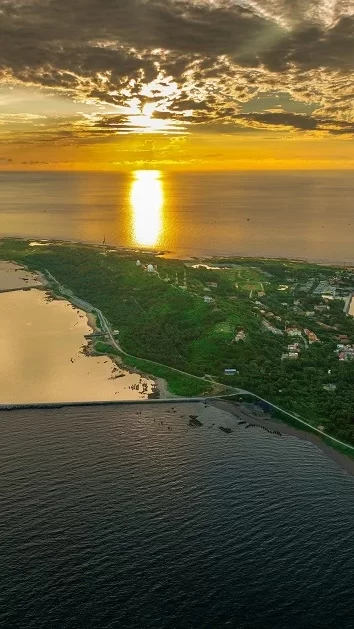
Bach Long Vi is where the white dragon’s tail swept the water, now the Tra Co peninsula at Mong Cai
Ha Long is where the Mother Dragon came down
Bai Tu Long is where her children landed beside her


Why the story matters
The descending dragon does more work than an origin story usually does. Hanh Tran, a lecturer in South and Southeast Asian studies at UC Berkeley, has observed that these tales connect to Vietnamese belief and history along two lines. One is the country’s long record of resisting invasion. The other reaches further back, to the belief that the Vietnamese descend from a dragon father, Lac Long Quan, and a fairy mother, Au Co, and that some hidden power has always stood ready in difficult moments.
Rooted in the age of the Hung Kings, the legend carries both a national instinct for resistance and a quiet faith in protection from above. It still moves writers, poets and scholars. It turns a place name into something closer to a statement of identity.
The people who came first
Before dragons or dynasties, there were people. Archaeology traces three successive cultures through this region, and together they make the bay one of the cradles of early Vietnamese life.
The Soi Nhu culture, roughly 18,000 to 7,000 BC. First uncovered through excavations near Soi Nhu cave, these people lived in coastal caves and on limestone islands. They ate shellfish and freshwater molluscs, gathered fruit, and worked with simple stone tools.
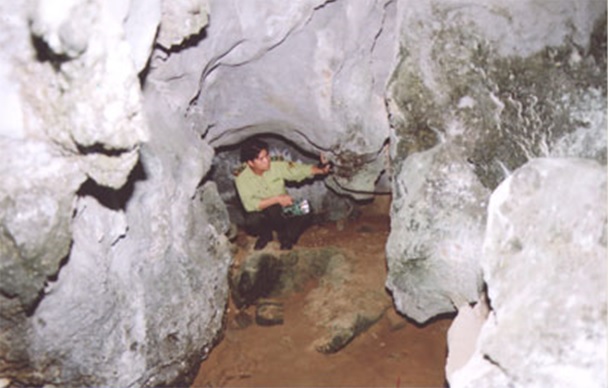
The Cai Beo culture, 7,000 to 5,000 BC, along the shores of Cat Ba and Ha Long. Fishing techniques advanced. The site has yielded hundreds of artefacts: grinding tools, axes, net weights, pottery. It is one of the largest ancient fishing settlements found anywhere in Vietnam.
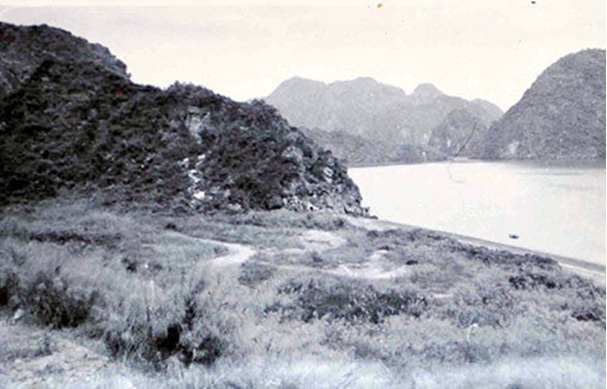
The Ha Long culture, dating back some 3,500 to 5,000 years. A fully maritime society of the Late Neolithic and Early Metal Age, counted among Vietnam’s four great prehistoric marine cultures. Its rhythms still carry in the floating fishing villages that drift across the bay.

A wall of stone in the water
Centuries later the waters near the bay carried two of the most decisive victories in Vietnamese history, both fought on the nearby Bach Dang River, and both won the same way.
In 938, Ngo Quyen planted sharpened stakes beneath the riverbed and timed his retreat to the falling tide. The Southern Han fleet followed him onto them. The victory ended more than a thousand years of Chinese imperial rule.
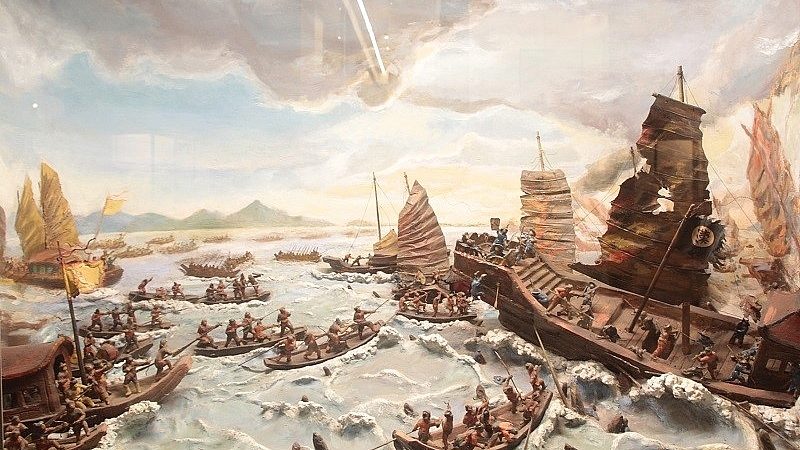
Three and a half centuries later, in 1288, Tran Hung Dao used the same tactic against the Mongol fleet of the Yuan dynasty, with the same result.
Fields of ancient wooden stakes, believed to be remnants of these battles, have surfaced from the riverbed repeatedly: in 1958, 2005, 2009, and again in 2019. The strategy is still taught.
It is worth noting how closely the history rhymes with the myth. The legend of the descending dragon describes a wall of stone raised in the water to break an invading fleet. Twice, on the river next door, the Vietnamese did precisely that with timber and tide.
Where the name came from
The name Ha Long is much younger than the bay it belongs to. Before the nineteenth century it appeared nowhere in Vietnamese records. The region carried a rotating set of other names instead: Giao Chau, Luc Thuy, An Bang, An Quang, Hai Dong, Hoa Phong, Nghieu Phong.
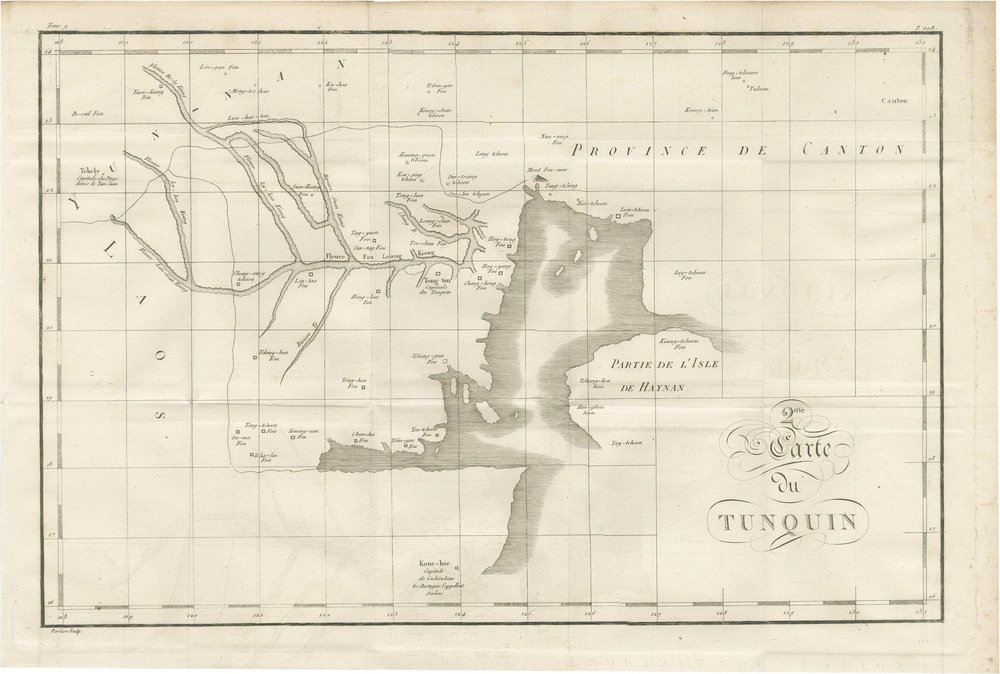
Ha Long surfaced only at the close of the nineteenth century, first on French naval charts of the Gulf of Tonkin, then in print. A Hai Phong newspaper reported that in 1898 Lieutenant Lagrèzin, captain of the Avalanche, and his crew saw a pair of large sea creatures moving through the bay. The paper ran it under a headline announcing a dragon in Ha Long Bay. To European sailors, the sinuous shape suggested exactly the creature Vietnamese legend had always placed here. The name held from that point, fixed into French maps and official record.
A port before it was a destination
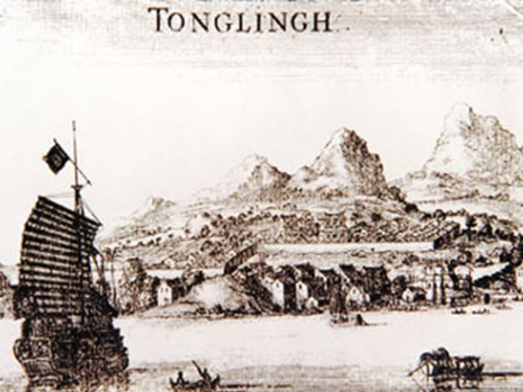
Long before the name settled, the region had a commercial reputation of its own. In 1149, King Ly Anh Tong established the trading port of Van Don near what is now Ha Long Bay, opening Dai Viet’s first official gateway to international trade. For close to seven centuries, from the mid-twelfth to the late eighteenth, Van Don ran as a full trading system, with checkpoints for ships, goods and taxation. It was a working stop on the maritime silk road, linking Dai Viet to China, Japan and partners across Southeast Asia through the Ly, Tran, Le and Mac dynasties.
Coal, maps and French names
The modern chapter opened under French rule. France took control of Quang Ninh in 1883. French geologists and explorers were the first to map the bay closely, and many caves and islets carried French names for a time. Dau Go Cave was christened la Grotte des Merveilles after its exploration in the late nineteenth century.

Coal drew the more serious ambition. The French Coal Company of Tonkin, founded in 1888, opened large-scale anthracite mining across Hon Gai. A maritime and fishing economy became an industrial one. The division is still legible in Ha Long City today, industrial to the east at Hon Gai, given over to tourism to the west at Bai Chay.
Recognition as a UNESCO World Heritage Site
The bay’s move from regional landmark to protected global site happened in stages.
| Year | Recognition |
| 1994 | Inscribed on the UNESCO World Heritage List for its aesthetic value |
| 2000 | Second inscription, for geological and geomorphological value |
| 2009 | Designated a Special National Monument by the Prime Minister of Vietnam |
| 2011 | Voted one of the New 7 Wonders of Nature in a global public poll |
| 2023 | Boundary extended at the 45th session in Riyadh to include the Cat Ba Archipelago, creating Vietnam’s first inter-provincial World Heritage Site |
| 2024 | Named an International Geological Heritage Site by the International Union of Geological Sciences |
The 2023 extension is worth pausing on. It brought Lan Ha Bay and the waters around Cat Ba inside the same protected boundary as Ha Long. Two bays long read as one landscape are now, formally, one heritage site. The descending dragon’s territory grew.
Seeing the bay differently
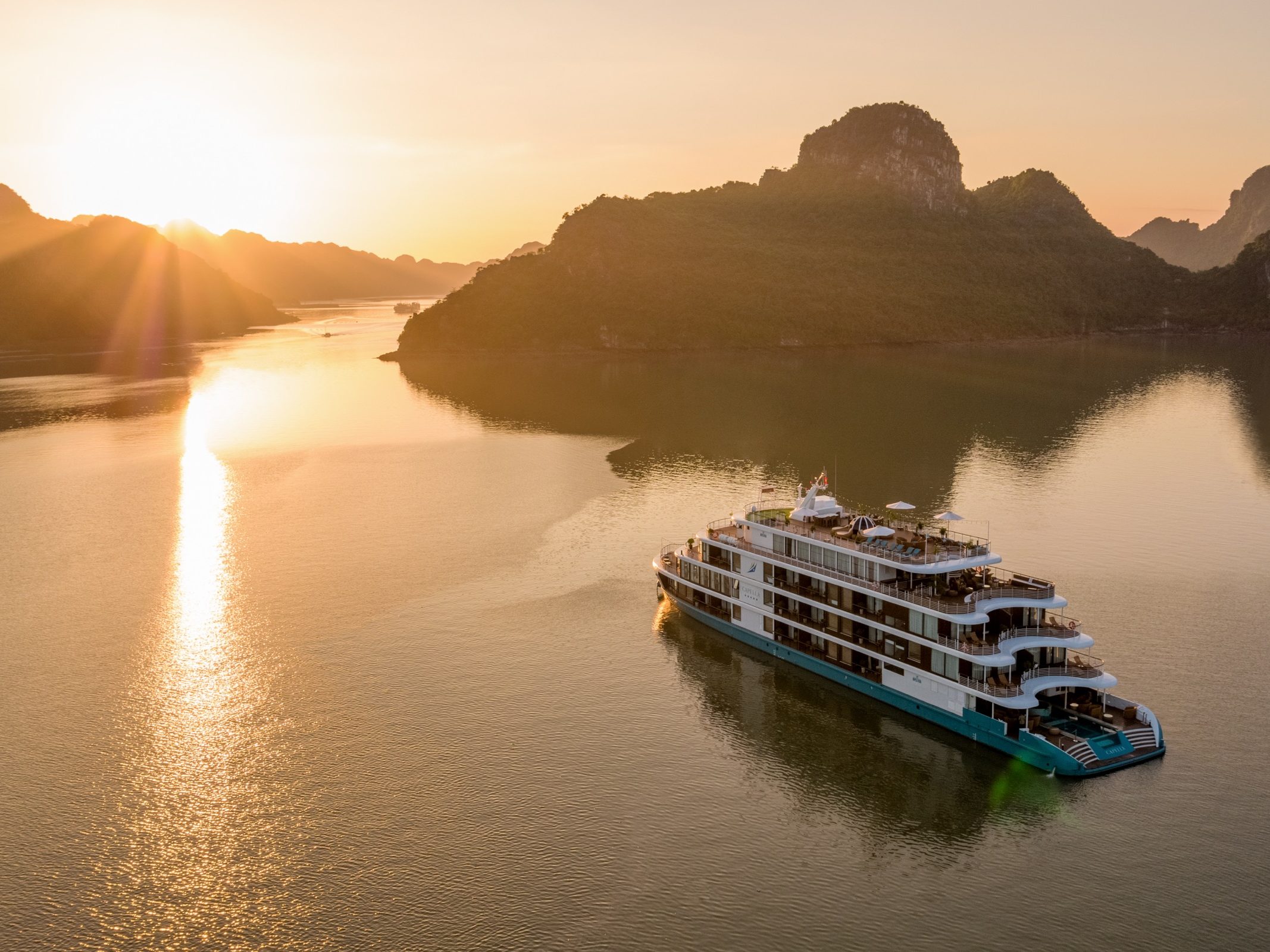
A seabed 570 million years in the making. A Neolithic fishing culture. Stakes driven into a riverbed and timed to the tide. A medieval port trading with Japan. French coal mines, then a UNESCO listing. Read in sequence, the story is a compressed version of Vietnam’s own: maritime, resilient, shaped at every turn by the sea. Running through all of it, binding the science to the myth, is the descending dragon.
That is what makes time here different from what the photographs promise. The floating villages still keep the rhythms of the Ha Long culture. The caves French explorers mapped and named are lit now for visitors passing through. The same towers said to have risen from a dragon’s jaws hold some of the most sought-after waters in Southeast Asia.
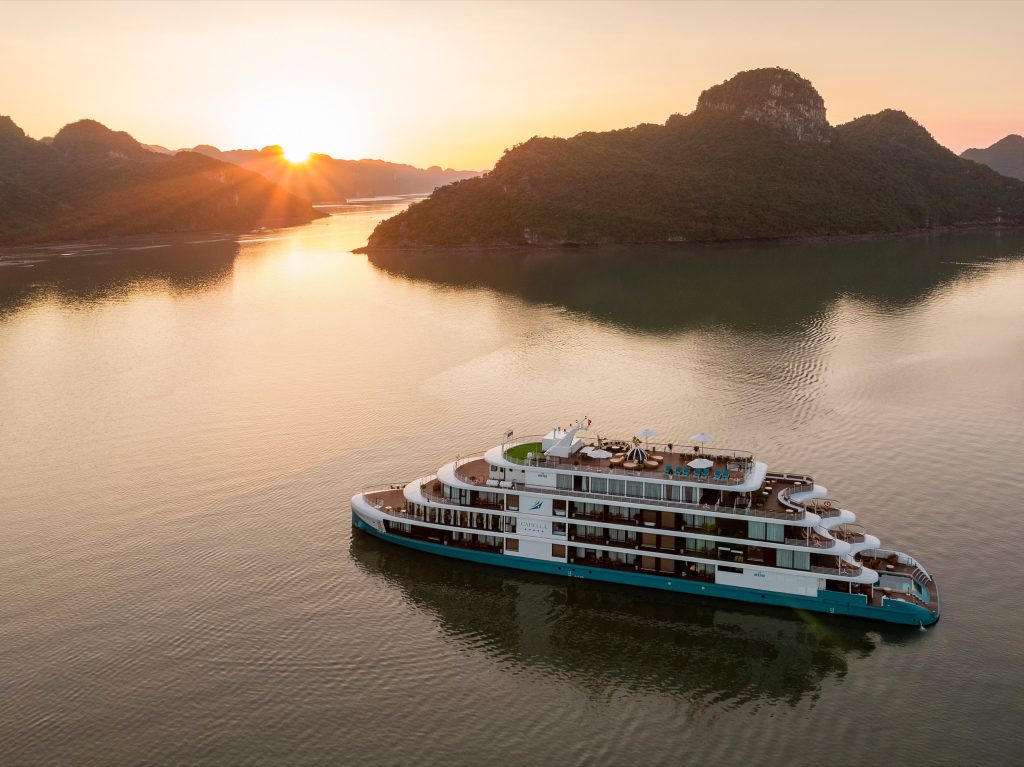
From a cruise deck the sequence unfolds slowly, which is the right speed for it. The towers arrive, hold, and recede. Kayaks find the gaps a tender cannot enter. The light goes gold, then blue, and the outlines soften back into the shapes that started the story.
Knowing the history does not add a footnote to the view. It changes what you are looking at.
Planning a first visit? Our Halong Bay Travel Guide 2027 covers cruise durations, the best time to sail, and what to expect onboard.
Questions
When is the best time of year to visit Halong Bay?
Spring (March to May) and autumn (September to November), when temperatures sit between 20°C and 28°C with clear skies and calm seas. Summer (June to August) brings heat and a risk of typhoons; winter (December to February) can be cool and misty, with lower visibility.
Is 2 days 1 night enough, or should I choose 3 days 2 nights?
Two days and one night is enough for a first visit, with kayaking, a cave and both sunset and sunrise on the bay. Three days and two nights suits travellers who want a slower pace, deeper exploration of Lan Ha Bay or Cat Ba Island, and more time for swimming and excursions.
What happens if my cruise is cancelled because of bad weather?
Sailings are regulated by the Quang Ninh Maritime Administration for safety, mainly during typhoon season (July – August). If a cruise is cancelled before you leave Hanoi, you can usually choose a refund or a new date. If it is cancelled mid-trip, you pay only for the services already used and the rest is refunded.
Does Lyra Cruise Collection include hotel pick-up in Hanoi?
Hotel pick-up is available from the Hanoi Old Quarter as an add-on rather than part of the cruise price. Add it when you book, or ask your travel consultant.
What is the difference between Halong Bay, Lan Ha Bay and Bai Tu Long Bay?
Halong Bay is the classic UNESCO site, with landmarks such as Sung Sot Cave and Ti Top Island, and the heaviest traffic. Lan Ha Bay, to the south near Cat Ba Island, has cleaner water, fewer boats and better kayaking. Bai Tu Long Bay, to the northeast, is the quietest and most untouched.
What is usually included in the cruise price?
Usually all meals on board, entrance fees, cave visits, kayaking or bamboo-boat rides and an English-speaking guide. Hanoi transfers, drinks, spa treatments and personal expenses are normally extra.
Can cruises cater for vegetarian, vegan or halal diets?
Lyra Cruise Collection caters for vegetarian, vegan, gluten-free and allergy-related diets at no extra cost with 72 hours’ notice, and halal meals can be arranged on request.
Is there Wi-Fi and phone signal on board?
Most modern ships have free Wi-Fi, though it can weaken between the karsts. Viettel and Vinaphone 4G/5G generally works in open water but may fade near cliffs and caves.
Is a cruise suitable for young children, pregnant women or older travellers?
Most cruises welcome families, but some caves and viewpoints involve stairs. Check with the cruise about step-free options and medical support before you book.
What should I pack for an overnight cruise?
Comfortable shoes for caves, swimwear, light layers, sunscreen and a light jacket for evenings on deck. If you travel by shuttle, check its luggage allowance in advance.